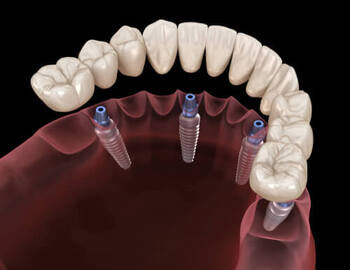
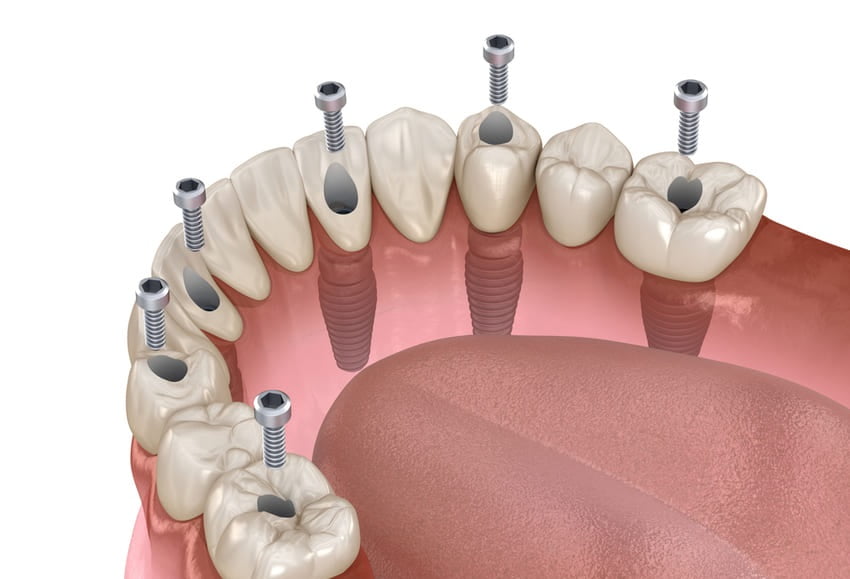
When it comes to full-arch restoration, All-on-4 and All-on-6 dental implant techniques are two of the most popular options. Both methods provide a permanent solution for patients who have lost most or all of their teeth, but they differ in terms of the number of implants, stability, cost, and suitability for specific cases. In this blog, we’ll compare All-on-4 and All-on-6 to help you decide which technique is the best fit for your needs.
Overview of All-on-4 and All-on-6 Techniques
All-on-4:
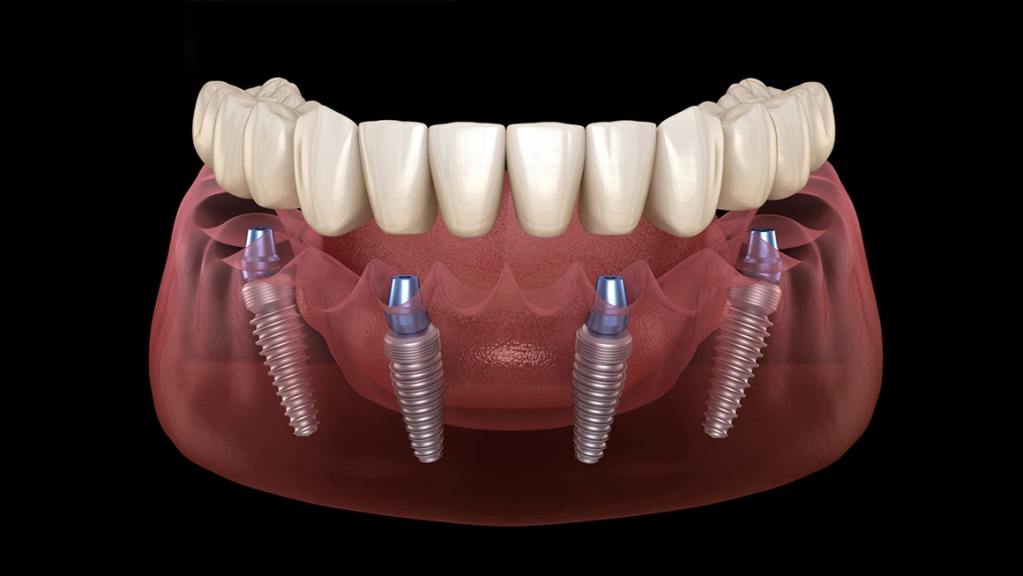
- Uses four dental implants to support a full arch of teeth.
- Implants are strategically placed, with two in the front and two angled in the back to maximize bone contact.
- Ideal for patients with mild to moderate bone loss.
- Often allows for immediate loading of the prosthetic teeth on the same day as surgery.
All-on-6:
- Uses six dental implants to support a full arch of teeth.
- Implants are placed with two in the front and four in the back for enhanced stability.
- Suitable for patients with moderate bone loss.
- Provides greater support and durability due to the additional implants.
Key Differences Between All-on-4 and All-on-6
| Aspect | All-on-4 | All-on-6 |
| Number of Implants | 4 implants | 6 implants |
| Stability | Highly stable | Even greater stability due to extra implants |
| Bone Requirements | Suitable for mild to moderate bone loss | Better for moderate bone loss |
| Cost | More cost-effective | Slightly more expensive |
| Treatment Time | Faster (often completed in one day) | May require slightly longer healing |
Factors to Consider When Choosing Between All-on-4 and All-on-6
1. Bone Quality and Quantity:
- All-on-4: Best for patients with sufficient bone density in the front of the jaw. The angled placement of the back implants often eliminates the need for bone grafting.
- All-on-6: Better for patients with moderate bone loss, as the additional implants provide more support and distribute chewing forces more evenly.
2. Budget and Insurance Coverage:
- All-on-4: Generally more affordable due to fewer implants and less complex surgery.
- All-on-6: Slightly more expensive but offers greater long-term durability and stability.
3. Desired Treatment Timeline:
- All-on-4: Often allows for immediate loading, meaning you can leave the clinic with a full set of teeth on the same day as surgery.
- All-on-6: May require a slightly longer healing period before the permanent prosthetic is attached.
4. Long-Term Goals:
- All-on-4: A great option for patients seeking a quicker, more cost-effective solution.
- All-on-6: Ideal for patients who prioritize long-term stability and durability, especially if they have moderate bone loss.
Case Studies: Who Benefits from Each Technique?
Case Study 1: All-on-4
- Patient Profile: A 55-year-old with significant tooth decay and mild bone loss in the upper jaw.
- Treatment: All-on-4 was chosen due to the patient’s sufficient bone density in the front of the jaw. The procedure was completed in one day, and the patient left with a fully restored smile.
- Outcome: The patient reported improved chewing function and aesthetics, with no need for bone grafting.
Case Study 2: All-on-6
- Patient Profile: A 60-year-old with moderate bone loss and a desire for maximum stability.
- Treatment: All-on-6 was selected to provide additional support and distribute chewing forces more evenly. The patient received a temporary prosthetic on the day of surgery and a permanent one after healing.
- Outcome: The patient experienced excellent stability and durability, with no issues eating hard or chewy foods.
Conclusion
Both All-on-4 and All-on-6 are excellent options for full-arch restoration, but the right choice depends on your specific needs, bone health, budget, and long-term goals. All-on-4 is ideal for patients with mild to moderate bone loss who want a faster, more cost-effective solution. All-on-6 is better suited for patients with moderate bone loss who prioritize long-term stability and durability.
If you’re unsure which technique is right for you, consult with an experienced dental professional. They can evaluate your bone density, oral health, and personal preferences to recommend the best option for restoring your smile.